Following on from Matt Wood-Hill’s excellent guide to market shaping techniques in government, I thought I’d add a few extra learnings.
Before I start though, please do go and read Matt’s work – it’s a brilliant foundational write up that I’m planning to add to over time. If you’ve any experience of market shaping in the public sector then you should too.
Rather than cover every possible market shaping tactic, this blog post shares what I think is the most likely and fruitful path for public sector policy makers to take over the next few years. Regular readers will know that I think better collaboration fixes most things, so there’s a lot of that here.
Scroll down for five fixes described in the order I think they should be tried, according to the needs and relative importance of any particular software sector. This doesn’t rule out other approaches, rather it’s an encouragement to try out some of these tactics as soon as possible. The sooner we start, the sooner we learn. The LGR clock is ticking, and the public expectation for our services is only going one way.
1 Identify highest value software sectors
The recent evaluation of the Local Digital Fund noted that only 19 of 61 funded projects resulted in deployed solutions. One of my conclusions from this is that few (if any) public sector organisations have the capacity to facilitate this many digital projects at once, and they need to identify the highest value targets.
The same applies to the fixes I advocate below. They should only be done with the highest value sectors, and each fix according to likely impact. We shouldn’t expect to try every fix in every sector.
So how to prioritise? I’d personally start with effort and potential value across every type of software a public sector body uses, particularly in light of seismic changes caused by LGR.
What software do councils need for Vesting Day and soon after? What would make a difference to their biggest budget outlays? What work could be delivered in time, and for what cost? Are there any projects that are close to being delivered, and need minimal help from the centre? Which individuals, councils and suppliers are keen to get stuck in? In the answers to these questions there will be a handful of projects that are worth spending time on now.
I’m thinking of a couple of specific projects as I write this, and will continue to make the case for them. If you have suggestions please get in touch.
2 Create communities with a purpose
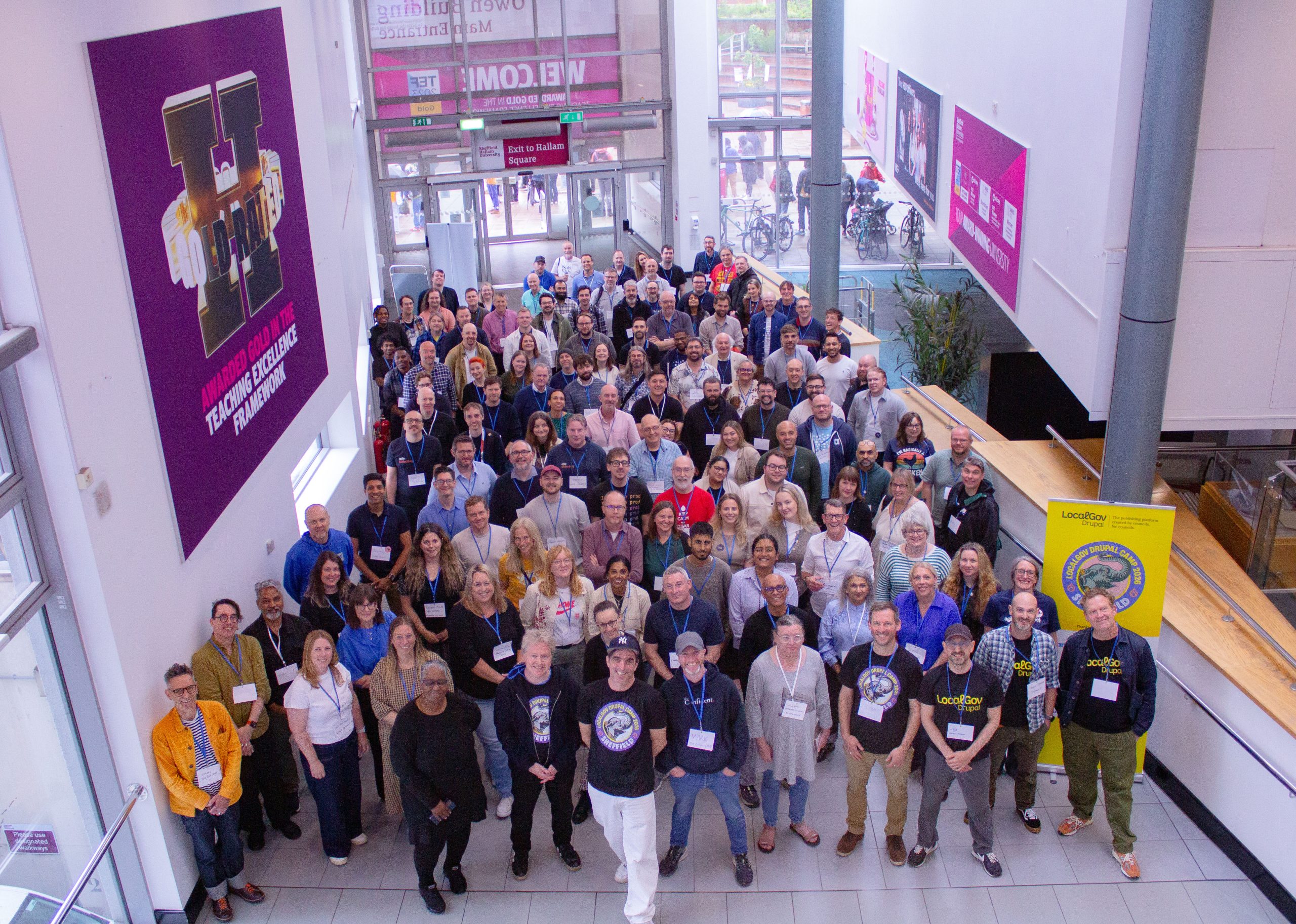
The communities for LocalGov Drupal and Open Digital Planning show how practitioners, suppliers and government can align for common purpose. Every high value software sector ought to have a buzzing community like these two.
My LocalGov Drupal colleagues are greater experts than me on growing and maintaining successful communities, so I’ll invite them to post here. In the meantime, here’s a few things that I think are important:
- the community has a shared purpose that’s clear and achievable
- events are lively and distinct (eg camps, jamborees, charettes, show and tells) with each providing genuine value for attendees
- there are asynchronous ways to stay connected for those who are short on time (eg Slack channel, newsletters)
- the community feels different to the day job (as in that it’s exciting and things get done)
A community in a new high priority sector could identify problems and opportunities with current software and services, and propose and work on solutions. It could focus on common needs, leading to shared code and standards, rather than repeatedly reinventing the wheel. Working together, a group of councils could increase demand for high quality solutions, providing a greater incentive for suppliers to satisfy.
At LocalGov Drupal we’ve found that many heads are better than one. It isn’t design by committee; we look for consent rather than consensus. Our work is often fuelled by bold ideas that are deemed ‘safe to try’ by our councils and suppliers.
3 Promote interoperability
One of my favourite digital thinkers, David Eaves, has a lot of smart things to say about sovereignty and interoperability. Here’s a great recent quote of his:
“The metric for success should focus on making it as simple as possible to move data and applications across suppliers. Critically, this cannot be achieved by regulation alone, it will also require deft procurement and a willingness to accept de facto as opposed to ideal standards.”
In article above he was tackling national sovereignty, but I think the same argument applies to even the most mundane public sector software. Policy makers should focus on making it technically and commercially feasible for councils to switch suppliers, and help foster more options to choose from.
There’s plenty of tactics to try, as Matt’s guide demonstrates. I tend to start looking at the grassroots level where some councils have enough interest and autonomy to push forward. The best starting place I’ve found is the LOTI’s wording for Data Access and API requirements. This particular document offers a de facto standard of detailed clauses that the 27 councils in the group could include in tender documents for suppliers.
There’s nothing to stop Combined Authorities and organisations in the NHS and elsewhere from picking this up and running with it. It could also be championed centrally. Could some of these requirements be included in a future revision of the Technology Code of Practice or the definition of ‘approved software’ advocated by the Levelling Up and Regeneration Act? Could they be cited by upcoming frameworks like the Government Commercial Agency’s Public Sector Software Solutions?
The ultimate stick is obviously legislation, and there are ongoing opportunities to consider this. There’s definite pros and cons in this approach, and it would be great to hear your views.
4 Encourage existing suppliers to get involved
For many suppliers, demand side preparation of the kind outlined above would be enough for them to get aboard. Speaking for LocalGov Drupal, we’re extremely keen that councils collaborate on common needs, open data and standards rather than going it alone.
We prefer to build once and well for everyone, rather than having to create and support many slightly different versions of the same thing. It eats up time and money that could be better spent breaking new ground. I’m sure there are many other suppliers that feel the same way, and the new communities springing up (as mentioned in point 2) will help focus their contributions.
For suppliers that need extra encouragement, I’ve seen great examples of government and industry working in partnership. The MHCLG Digital Planning Programme, as an example, runs a regular productive industry working group, and a data standards community. It has also run funding rounds to encourage innovation with both new and well-established software and services.
It’s vital that the biggest existing suppliers get involved. We all know that the public sector takes time to adopt new technology, so if you want an across the board improvement in the quality of software in a single Parliament, you have to start with technology that’s already in use.
5 Support software partnerships
This fix is potentially the most tricky to pull off, but I remain convinced that it’s necessary to introduce lasting change to public sector software markets.
The solutions I’m drawn to are ‘software partnerships’ like LocalGov Drupal and LocalGov IMS where councils and suppliers have teamed up to build software and services. There’s the often forgotten SELMS, a consortium of library services in the south east of England that work together on common needs, then buy that thing using an existing government framework.
This ought to happen more often. One of the reasons it doesn’t is that no single council has the time and money to start a collaboration on its own – it requires alignment across two or more sovereign organisations and that requires focus and selflessness to achieve.
It’s not just about money: the recent evaluation of the Local Digital Fund identified many useful learnings for projects of this kind. I’ll share my thoughts on the Fund in a future blog post.
So this kind of work is hard, but I think it’s worth it. On reading this, my good friend and colleague Mark said:
“I’d add that’s it’s hard to set up and get alignment on initially, but also a lot of fun. And then the benefits into the future are massive.“
Totally agree with that. So I’ll be pushing for more collaborative projects to get established – the councils involved will benefit directly, and learnings will help the whole of the public sector.
Comments welcome
As always, these views are wholly my own. My recent blog posts have sparked a few useful conversations, and I’m really grateful to everyone who’s shown an interest in this.
Please keep your thoughts coming, and maybe we can deliver some meaningful change in time for councils going through LGR.
One response
[…] if by magic, the mighty Will has also posted on improving local government software today, and I heartily recommend you taking a few minutes out to read what he has to […]