I spent last week at DrupalCon in Rotterdam. For non-Drupal folks, they are annual jamborees in Europe, the United States and around the world.
My first DrupalCon was last year in Vienna. I was taken aback by the architecture and the event itself – people were so kind and knowledgeable and were all pulling the same direction.
If anything, Rotterdam was even better. I was more familiar with the format and knew a few more people. I had many great chats and came away full of ideas, including a few noodlings about this blog post.
The city’s modern buildings are also completely bonkers and wonderful – see a few of my holiday snaps. I wish the UK had more ambition.
I wasn’t there just as a Drupal person. I was there as someone who spends most of my working life thinking about public sector technology in the UK. And the more I watched, the more I found myself spotting patterns we could learn from.
Not because everything should be made with Drupal (although more things should). But because the Drupal community has been quietly working on three problems the UK public sector tech community is also wrestling with — and I think they’re a few steps ahead of us.
1 Drupal is already ‘modern software’
Over the last few years I’ve seen UK government departments set aside powers for ‘approved software’, then try to define and publish criteria.
Most of us can name the kind of characteristics that so-called ‘modern software’ should have. Open standards. Decent APIs. Councils owning their data. User-centred. AI-ready. Accessible. Secure. Sovereign. Environmentally sustainable. Made in the open.
What I haven’t yet seen is an easy-to-use definition of modern software that government has published, and stands behind. That’s in a form that councils can easily use to stimulate demand, and suppliers know how to plan for and satisfy.
Drupal has done much of this work. It has open standards and APIs (and it’s open source). It works in the open — public roadmap, public issue queue, public governance. And it’s AI-ready, with AI sitting on top of governance, permissions and workflows that were already there, not bolted on afterwards.
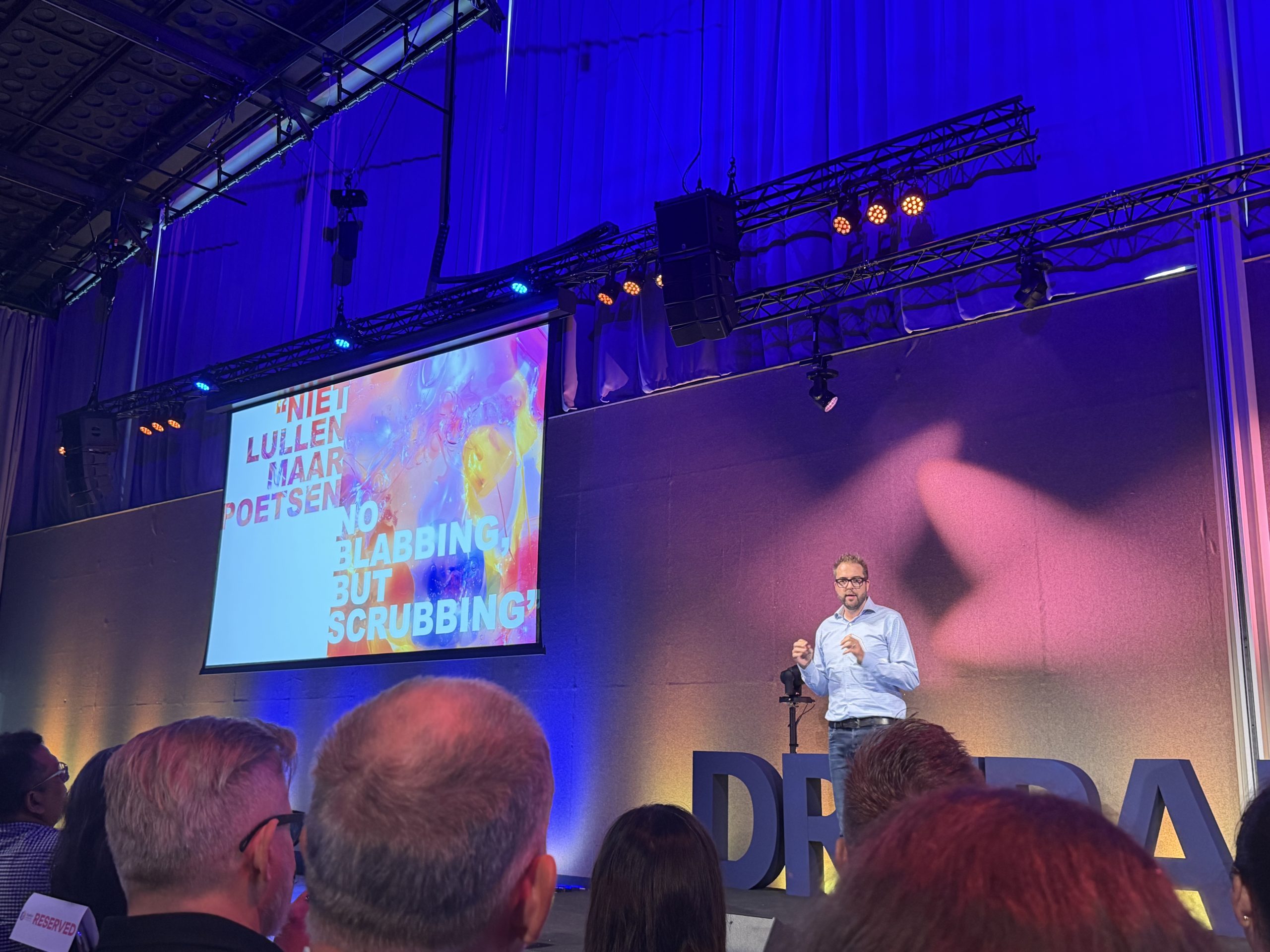
Dries Buytaert, Drupal’s founder, talked in Rotterdam about the latest innovations. I won’t go into any technical detail — partly because much of it went over my head, and partly because the detail isn’t the point. What mattered was that none of it was aspirational. It was just how the thing works, and has worked for years.
That’s what we should study. We’re starting to push for modern software. Drupal has been building it. The gap between those two things is the bit I’d like to see us close.
2 Fund the foundations, once, together
Here’s a question we grapple with in public tech: how do you fund the unglamorous infrastructure everything else depends on?
Drupal’s answer is interesting. When the community decided AI was both a threat and an opportunity, it didn’t just talk about it — it co-funded a programme. The Drupal AI Initiative has crowdsourced over $1.5m in cash and in-kind contributions from more than 50 contributors, working to a public roadmap.
They fund people. Full-time contributors. To build foundations everyone can use.
There’s a lot of UK government interest and funding for pilots, competitions, innovation programmes. That’s all needed. What’s harder is funding the shared foundations underneath, the things every project needs but no single project owns. A colleague told me yesterday that this is sometimes referred to as the ‘wrong pocket problem‘. Have any of you worked on it?
Today I had a conversation about shared tooling for collaboration across central and local government, the NHS and partners. Rather than starting from scratch or buying proprietary software, where’s the open source communities for platforms that provide reuse and knowledge libraries, chat, whiteboards, user profile pages, and CRM that we could join and contribute to? Or if we want to buy something, is there an Advance Market Commitment that could be made for “modern” software offering this kind of functionality?
Drupal’s model isn’t directly transferable. It’s a community, not a government. But it’s a useful thought: what would it look like for the organisations that depend on a piece of open infrastructure to co-fund its maintenance, once, together? If anyone would like to chat about this, please look me up.
3 Collaborate for the long term, not just the event
There are so many public tech events: conferences, Camps, hackathons. They’re genuinely useful — they build energy and connections, and I’ve seen many good things come from them.
DrupalCon is an event too. But it sits inside a permanent infrastructure of collaboration that gives the event meaning well into the future. There’s Drupal.org, where code, issues and documentation live. There’s Slack, where the day-to-day work happens. There are local meetups and dev days around the world, all year round.
And then there’s Dries’ keynote, known as the DriesNote, which I mentioned above. At every DrupalCon, the founder gets up in front of the community and gives a state of the union. What’s been built. What the problems are. Where the focus goes next. It’s slick like an Apple keynote, but not smug and definitely not sales-y. Dries is a great presenter, and he obviously cares about the community and the work.
In Rotterdam Dries announced a new advocacy programme, which rewards people for writing tutorials, recording demos, translating articles, amplifying someone else’s talk. This blog post is the start of my contribution.
Dries named Drupal’s reputation gap as its number one challenge: “Drupal doesn’t need hype. It needs a better public record.” That’s leadership. A person, in front of the community, saying: here’s where we are, here’s what matters, here’s what I need from you. It’s a vision we can all get behind.
And it’s kind. That’s what struck me most. The community is genuinely kind. There are contribution days, mentoring, “Drupal in a Day” for newcomers. In recent recaps I’ve read of Drupal events, there’s often recurring themes. One is that we need courage to lead change and set the tone. Another is to make sure nobody gets left behind. They’re defining characteristics of the Drupal community and I haven’t seen much of this elsewhere. (If you have, I’d love more examples).
Drupal’s community is founded on relationships not transactions. Made of people who keep showing up, year after year, because they’ve built trust and created things together. UK public service initiatives like One Big Thing show we can mobilise at scale. The next question is what sustains connections, momentum and focus over time.
Drupal has lots to teach us
First off, Drupal and LocalGov Drupal are great community-created products. If you need a CMS… OK, I’m biased.
But what the Drupal community builds, how it’s funded, and how people stay focused and aligned are almost more important to me.
I’m still a Drupal newbie. (Drubie?) I imagine it has challenges like anything else. And it’s not the UK public sector; it doesn’t have to solve the same things we do.
The patterns are worth borrowing though. Publish what modern software looks like, and get behind it. Fund the shared things collectively, not just project by project. And build communities that are designed to sustain collaboration over years, using the energy and enthusiasm of one-off events as part of the mix.
Dries quoted a Dutch saying at Rotterdam: “Niet lullen maar poetsen.” Stop talking, start working. He argued Drupal has taken that advice almost too well — the work is done, and now it’s time to talk louder about what’s working.
I think we can learn from both halves. Keep doing the work. And get better at telling the story of what’s working, so we can build on it together.
As always, these views are wholly my own. If you were at DrupalCon, or you’re working on any of this in your own corner of the public sector, I’d love to hear from you.